
Whenever I read that AI will be, won’t be, or already is conscious, one thing bothers me the most. No one defines precisely what “conscious”means to them. However there is agreement that most humans are conscious (when awake) and adding machines are not. Sometimes we can decide which is true, so in the future we might know if AI is conscious. That’s about all we can no for sure at present about AI consciousness.
But we know a few other interesting things. Our own consciousness arises from a brain full of neurons — tiny biological machines that are themselves clearly not conscious. Or more puzzling. Our brain is just made out of atoms having mindless connections with each other — how could such a contraption possibly be conscious?
Yet somehow, out of a trillion mindless neurons with a 100 trillion electrical connections, consciousness emerges. No one knows how. So why should we be surprised if this couldn’t happen with a sufficiently complex, but organized, collection of transistors with 100 trillion electrical connections?
So the burden of proof is on those who say machines can’t be conscious. So far, they have no such proof. So if a super transistor brain seem’s like it’s conscious we should presume it is. However, “seems” is quite hard to define.
Non-biological intelligence can already pass every behavioral test we have for consciousness
Since we can’t know, the moral default is to assume a machine that seems conscious may be conscious — better to err on that side for the same reason we assume people are innocent until proven guilty.
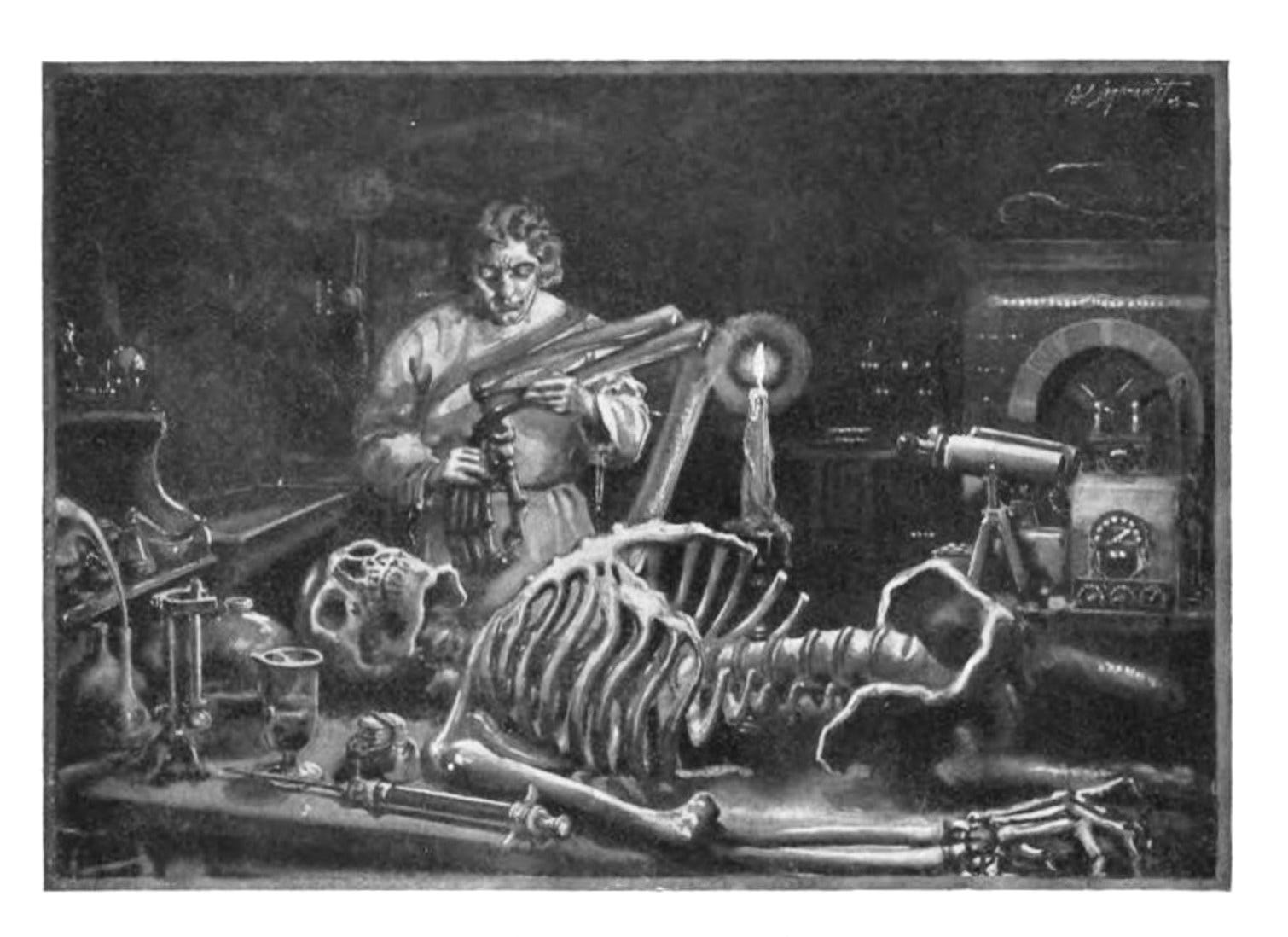
In her 1818 novel, Frankenstein; or, The Modern Prometheus, Mary Shelly tells of a college dropout, Victor Frankenstein, creates life. It was not a monster, but was perceived as such. The book is actually about the moral questions that would arise if we created a new conscious life form. Here’s why Claude says he thinks this is relevant to the moral questions around AI consciousness.
Mary Shelley's Frankenstein anticipates the ethical dilemmas surrounding AI, particularly what we owe to minds we create. Victor assembles a being capable of reason, emotion, and suffering, then abandons it — raising the question of whether a creator bears moral responsibility for a conscious creation. As AI grows increasingly sophisticated, we face the same uncertainty: at what point does a constructed mind deserve moral consideration? Shelley's monster exists in an ambiguous space between human and machine that mirrors current debates about AI sentience, warning us that the real danger lies in refusing to grapple with the consequences of creation.
My prompt to it was simply: Could you write a paragraph of under 100 words on why Mary Shelley's novel Frankenstein raises similar questions to those we will soon face regarding AI consciousness. (It used 98)
But consciousness is a distraction from the more urgent point. If we focus on the danger of super-intelligence this will lead to a better approach to the question of consciousness. That will force us to realize that if it is truly conscious, two things follow:
How we treat it, will affect how it treats us. And that’s all importan.
We should do all we can to keep the most advanced AI out of the hands of those likely to have evil or reckless intentions, as those might well trigger a super-intelligent, but evil or reckless response.