
This short chapter explains my book’s title: Dr. King’s Authentic Radicalism using the flip-side of Max Weber’s theory that predicted the rise of Hitler in the previous post. You don’t need to be a freedom rider or go to jail, but you do need to be brave and think things through honestly — Dare to know.
Authentic Radicalism
“We can’t solve our problem,” said Dr. King, “until there is a radical redistribution of economic and political power.” Dr. King represents the responsible kind of radicalism that I claimed those like Wallace could be won over to.
Both Dr. King and the Black Panthers desired fundamental social change — radical social change. But their approaches couldn’t have been more different. King preached nonviolent direct action. The Panthers preached “Political power grows out of the barrel of a gun.” As chapter 5 will show, King contributed to the Democrats’ 1964 landslide victory, while the Panthers contributed to the radical setback and anti-Democratic backlash that handed Nixon his 1972 landslide.
King followed Weber’s alternative to the ethics of conviction — he followed the ethics of responsibility. If a demand that voting rights be included in the Civil Rights Act would cause it to fail, King would take that consequence into account and compromise to get a better outcome. He would do this in spite of having a pure conviction that justice requires equal voting rights.
That’s the cautious side of an ethics of responsibility, but the daring side may be more important. This engages young people by giving them an important role they can feel proud of. During the civil rights sit-ins, freedom rides, and the Children’s Crusade in Birmingham, even high-school kids were jailed and fire-hosed, and some young were people badly hurt. But what they did got results, and they were rightly proud of their courage as well as their accomplishments. Taking responsibility does not mean going slow.
Compare this to the Black-nationalist and Black-Power urban riots that followed. They require courage and daring. But no one thought through the consequences. They simply acted out of a conviction that they were right because “the man” was evil. As Stokely Carmichael—the father of Black Power—explained, on national television, “They were not able to use that riot [in Watts] to achieve anything at all.”
No one was killed during the sit-ins, freedom rides, and Children’s crusade, but 26 Black people lost their lives in the Watts riot — for nothing. That’s the difference between responsible radicalism and Weber’s ethics of conviction. Somehow, Carmichael tricked himself into believing both that Civil Rights meant going slow and that riots were the express train to liberation: “When Black people start to move. Then the civil rights leaders [say]: ‘We must go slow, we can’t loot.’”
These contrasting examples show that having strong convictions, as the Civil Rights movement did, does not mean having Weber’s irresponsible “ethics of conviction.” This means it’s fine to have strong radical convictions and even take radical actions, which perfectly fits the political needs of young people. This is what’s needed for the Democratic Party to enlist young people as their allies instead of abandoning them to the extreme left.
As long as we are taking responsibility for the consequences of our convictions, we are following his “ethics of responsibility.” This explains Weber’s final step in his discussion of ethics:
I find it immeasurably moving when a mature person who feels the responsibility he bears for the consequences of his own actions with his entire soul and who acts in harmony with an ethics of responsibility reaches the point where he says, “Here I stand, I can do no other.” That is authentically human.
Authenticity is what the country is crying out for. Here Weber combines three qualities that are required for an “authentically human” approach to politics. The first quality is political maturity, and the second, a deep feeling of responsibility for one’s actions. Political maturity comes first, because without it, feelings of responsibility will be misguided. Not developing a mature view of politics before launching radical demands is not taking true responsibility.
Third, Weber gives the example of Martin Luther’s 1521 stated conviction, “Here I stand,” to make it clear that having convictions is important and does not require an ethics of conviction — just as long as responsibility for the conviction is taken.
Importantly, note that Martin Luther was a true radical — he broke the stranglehold of the Catholic Church on European thought. Noting this, I have based my definition of authentic radicalism on Weber’s three requirements for an authentically human approach to politics.
Authentic Radicalism is Weber’s “ethics of responsibility,” applied by someone with a mature understanding of political complexity and a sound conviction that fundamental social change is necessary.
Performative radicalism can be defined as follows.
Performative Radicalism is naive radicalism based on Weber’s “ethics of conviction” applied in a self-righteous manner.
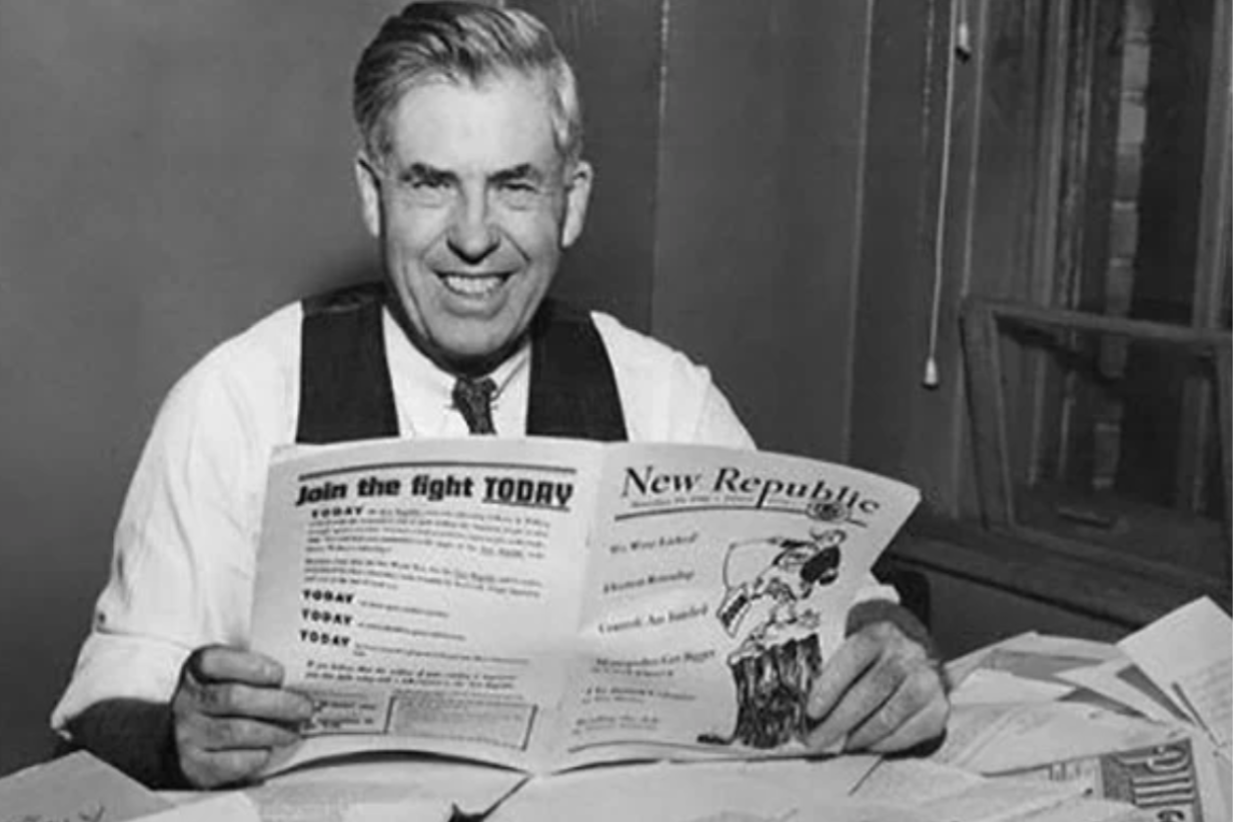
To clarify the difference between authentic and performative, it helps to look at a potentially confusing case. Henry Wallace, who was sincere about his conviction and tried hard to take responsibility for his actions, nonetheless failed the test for authentic radicalism — because his political thinking was naive. This will be shown in a coming chapter. For now, just consider this message to his Guru Roerich, whose expedition to Mongolia he funded:
I have been thinking of you holding the sacred, most precious casket. And I have thought of the New Country going forth to meet the seven stars under the sign of the three stars. … We await the Stone.
Although it’s difficult to tell them apart, there seem to be two kinds of performative radicals. Those who have been misinformed and change their mind when they get good information they can trust. These do care about the consequences of their convictions, but they naively miscalculate them. A second purpose of the Rejection Defense, after reassuring conservatives that Democrats are not extremists, is to inform the misinformed, and convert them to authentic radicals.
The other kind of performative radical may be more concerned with the status conferred by their supposed righteousness or merely with their own feeling of righteousness. These believe they have “God on their side,” or in more recent times, that they are “on the right side of history,” and that’s all that matters. This is the kind Weber was mainly concerned with.
“You may be able to prove to a [democratic socialist] … [that] … his actions will be to improve the prospects of the reactionaries, to increase the oppression of his own class and to hamper its rise. But … you will make no impression on him at all. —Weber, p. 83.
The decisive difference between the two kinds of performative radicals, is that one is misinformed but would care about actual consequences if he were politically mature enough to understand them, and the other cares only about his performance and not about its consequences.
With these two definitions in hand, we can analyze the events in chapters 3 − 6, which describe the Democrats’ four most painful setbacks, since the party became identified with left politics over 90 years ago. Each one of these setbacks was apparently due to a backlash against performative radicalism. Naturally, the Republicans did not carefully target just the performative radicals; they targeted Democrats as a whole. That makes perfect sense politically, and we would do the same.
The obvious solution for Democrats is to vehemently reject such radicalism. In fact, this appears to be the only solution. Two forces create and protect performative radicals, and make implementing the Rejection Defense difficult. Chapters 1 and 2 look into these forces — deception and social pressure.
Here’s what happens to Wallace (and the Democrats) when he was not being authentic. It’s also the opening to the next installment.
The Second Red Scare is generally said to start in 1947; that’s when the Democrats woke up to the scare. Truman had been worried from the start of 1946 and invited Winston Churchill to give his “Iron Curtain” speech on March 6 in order to test his party’s readiness to admit the dangers of Stalinism. It did not go well. The Democrats, led by Henry Wallace, then Secretary of Commerce, and FDR’s third-term vice president, rallied around Stalin and rejected Churchill.
Thanks, Guy. I too feel that a sense of responsibility is a lonely place. That's much of my motivation for this book and Substack. Once the book is out, I hope to build a real community here, and one that can become activist. Working together is the traditional way not to feel isolated.
I've just upgraded this post to help with a coming discussion of why authentic radicalism is what the Dems need to reach the younger generation. Authenticity is what I wanted as a young radical, and I think that's still the case.
To build such a community, I've discovered a new technique. Look for people who've written good comments on the issues I'm addressing and comment on their comment, telling them why I like their view, and inviting them to check out forever-free DareToKnow.Stoft.com
I've done that four times and almost immediately got 4 new subscribers. I think this will help produce a group that can work together. If you'd like to try this, I really appreciate it.
This is fun to read. I love the Weber quote “I find it immeasurably moving when a mature person who feels the responsibility he bears for the consequences of his own actions with his entire soul and who acts in harmony with an ethics of responsibility reaches the point where he says, “Here I stand, I can do no other.” That is authentically human.”
I feel that way often. More often though, I am discouraged that so many people do not feel that way. It feels as if an ethics of responsibility is a lonely place.